
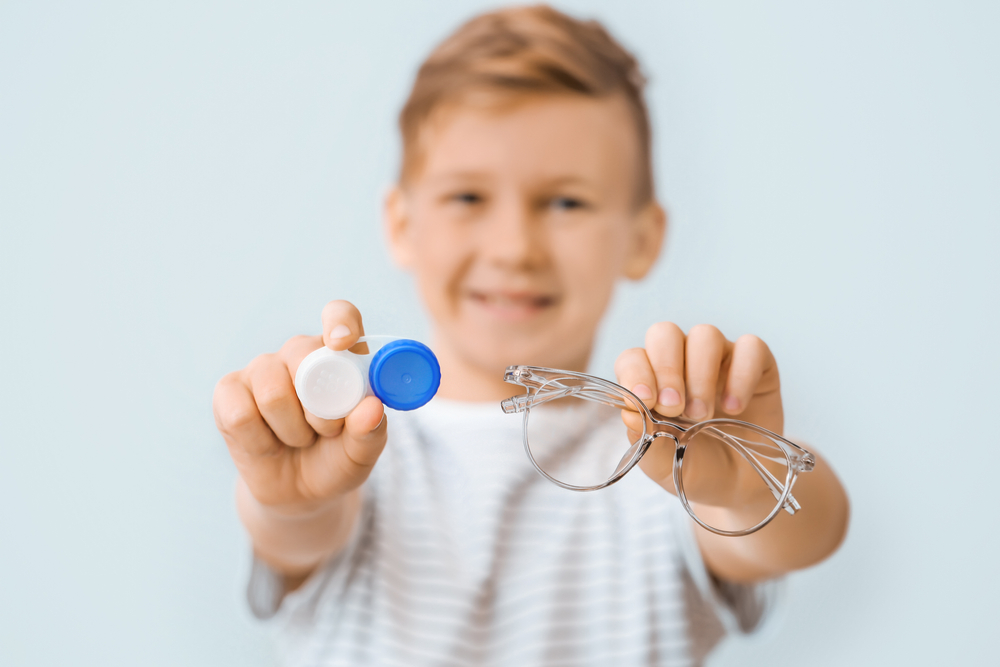
When a child’s nearsightedness continues to increase, standard glasses only correct blurry distance vision. Myopia management is designed to slow that progression while helping children see clearly. At Chino Hills Eyecare Optometry, we help families compare treatment options based on age, prescription, eye health, maturity, and daily routine.
The Importance of Myopia Management
Myopia often progresses while a child’s eyes are still growing. As the prescription becomes stronger, the eye may also become longer. Managing myopia early helps reduce how quickly it worsens and may lower the long-term risks associated with higher levels of nearsightedness.
Two effective options for children are MiSight 1 day contact lenses and Essilor Stellest eyeglass lenses. Both provide clear vision and use specialized optical designs to help control eye growth, but they fit different needs.
How MiSight Daily Contacts Work
MiSight 1 day lenses are soft, single-use contact lenses worn during the day and discarded after removal. They correct distance vision while creating a treatment signal that helps slow myopia progression. MiSight is FDA approved for children who are 8 to 12 years old when treatment begins and meet the required prescription and eye health criteria.
These lenses are often a strong choice for active children in Chino Hills who prefer freedom from glasses during school, sports, and other activities. Because they are daily disposables, there is no overnight wear or lens-cleaning routine. Children must still be comfortable inserting and removing contacts and following safe hygiene instructions.
How Stellest Lenses Work
Stellest lenses look and function like regular eyeglasses, but they contain advanced lenslet technology around a clear central viewing area. This design corrects nearsightedness while helping slow the eye growth linked to myopia progression. Stellest lenses are FDA authorized for children ages 6 to 12 when treatment begins.
For younger children or those who are not ready for contact lenses, Stellest lenses provide a simple, non-invasive option. They are worn like standard glasses, making them easy to include in a child’s daily routine. Consistent wear is important for achieving the intended myopia management benefits.
MiSight vs. Stellest: What Should Parents Consider?
When comparing MiSight contacts and Stellest lenses in Chino Hills, we look at several practical factors:
• Your child’s age, prescription, and amount of astigmatism
• Comfort and readiness for handling contact lenses
• Participation in sports or activities where glasses may be inconvenient
• Ability to wear the prescribed lenses consistently each day
Neither option is automatically better for every child. A child who is responsible and eager to wear contacts may prefer MiSight, while a younger child or one who feels more comfortable in glasses may do better with Stellest.
Choosing a Personalized Myopia Management Plan
The right choice starts with a comprehensive myopia evaluation. We examine your child’s prescription, eye health, vision needs, and progression history before recommending treatment. Regular follow-up visits allow us to monitor changes and adjust the plan when needed.
For families in Chino Hills, our goal is to make myopia management practical, comfortable, and easy to maintain. Whether your child is better suited for MiSight daily contacts or Stellest lenses, early and consistent care supports clearer vision throughout the school years.
Schedule your child’s eye exam with Chino Hills Eyecare Optometry and discover whether MiSight daily contacts or Stellest lenses are the right choice for managing their myopia. Visit our office at 3233 Grand Ave., Suite M, Chino Hills, CA 91709. Call (909) 591-2034 to book an appointment today.